
Best eSIM for off-the-beaten-path travel in Indonesia (not visiting Bali)

If you plan to travel to less-touristy regions rather than Bali, staying connected can be tricky. WiFi is less reliable, and SIM cards might be hard to find outside the main cities. That’s where an eSIM becomes the best option.
This guide will help you choose the best eSIM for traveling off the beaten path in Indonesia, especially if you’re heading to remote or rural destinations.
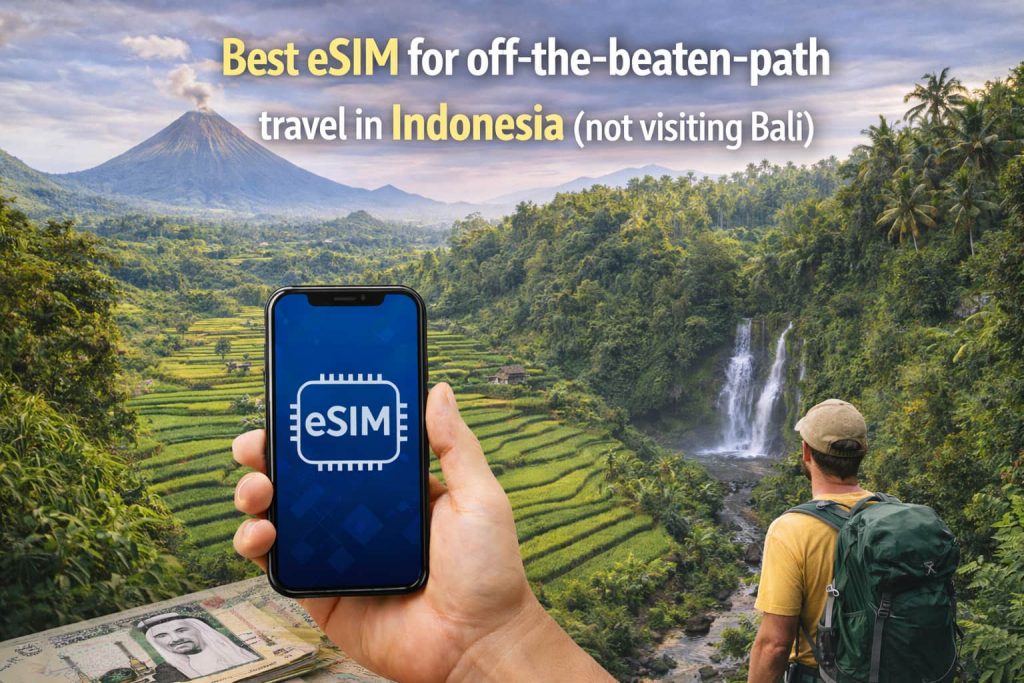
Table of Contents
I. What Is an eSIM and Why It’s Ideal for Rural Indonesia
An eSIM (embedded SIM) is a digital version of a standard SIM card that lets you activate a data plan without buying a physical card. It works directly inside your smartphone or tablet—no. No need to insert or remove anything.
Why eSIM is perfect for off-the-beaten-path travel:
- You can set it up before you even land in Indonesia.
- No need to find a local store or handle a physical SIM.
- Quick activation by scanning a QR code.
- Lets you stay online anywhere covered by the local network.
- Avoid expensive international roaming charges.
A convenient place to get one is [https://indonesiaesim.com/], which offers prepaid eSIM plans designed specifically for travelers in Indonesia.
II. Common Challenges for Travelers Outside Bali
If you’re heading to Sumatra, Kalimantan, Sulawesi, Flores, or Papua, connectivity might not be as easy as it is in Bali or Jakarta. Here are common problems travelers face:
- Limited WiFi access: Hotels and guesthouses in small towns often have slow or unstable connections.
- Few SIM card vendors: In some rural areas, finding a mobile shop for registration can take hours.
- Language barriers: Buying and activating a local SIM card might be difficult if you don’t speak Bahasa Indonesia.
- Varying network quality: Not all local operators have equal coverage in remote regions.
Using an eSIM solves most of these issues because you can activate your connection online and get access immediately upon arrival.
III. How eSIM Works in Indonesia
Once you purchase an eSIM plan, you receive a QR code by email. You simply:
- Open your phone’s camera or eSIM settings
- Scan the QR code
- Activate the plan
- Turn on mobile data and data roaming
- You’re online instantly
Most travelers use 4G LTE networks, and coverage extends across major islands, even smaller regions like Labuan Bajo or the Togean Islands (though connection speed may drop occasionally in very remote zones).
IV. Network Coverage Across Indonesia
Indonesia’s main mobile networks include Telkomsel, XL Axiata, and Indosat Ooredoo. Among them, Telkomsel usually delivers the widest coverage, especially outside major tourist hubs.
If you buy an eSIM through [https://indonesiaesim.com/], your data plan will connect to the strongest local network available automatically, depending on your location.
Coverage expectations:
- Excellent: Java, Sumatra (north & west), Lombok
- Good: Flores, Sulawesi, Sumbawa
- Moderate: Maluku Islands, Papua region
While 5G is available in main cities like Jakarta and Surabaya, most rural areas rely on strong 4G signals, which are more than enough for maps, messaging, and social media.
V. Data and eSIM Plan Options
Travelers exploring rural Indonesia generally need stable Internet access for maps, translation, and messaging apps rather than heavy streaming.
Common eSIM data bundles start at:
- 1 GB for 7 days
- 3–5 GB for 15 days
- 10–20 GB for 30 days
The plans are fully prepaid, meaning you pay once, with no roaming fees or hidden charges.
You can find these flexible prepaid eSIM packages at [https://indonesiaesim.com/], where setup takes just a few minutes.
VI. Benefits of Using an eSIM Instead of a Local SIM
- Convenience: You don’t need to search for a store, present your passport, or struggle with language barriers.
- Instant Connectivity: Activate as soon as your plane lands—you’re online immediately.
- Flexibility: Use one eSIM across multiple islands without changing carriers.
- Keep Your Main Number: You can still receive texts or calls on your home SIM while using the eSIM for data.
- Security: No risk of losing a physical card, and no need to handle small plastic SIMs while traveling.
VII. Tips for Staying Connected in Remote Areas
- Turn on data roaming for your eSIM once you arrive in Indonesia.
- Download Google Maps offline for regions with weak coverage.
- Use WiFi only on safe networks (e.g., your hotel) to protect your data.
- Carrying a portable power bank—signal coverage can sometimes drain your phone battery faster.
- In mountain or island regions, step outdoors for better signal strength.
VIII. Comparison: eSIM vs SIM Card vs Pocket WiFi
| Connection Type | Setup Method | Where It Works Best | Suitability for Remote Regions |
| eSIM | QR code activation (digital) | Nationwide | Excellent |
| Local SIM card | Buy in-store, register with passport | Cities, large towns | Limited |
| Pocket WiFi | Rent device, requires charging | Groups | Moderate |
IX. Final Thoughts
Traveling off the beaten path in Indonesia is one of the best ways to experience its true diversity — but staying connected is still important for navigation, communication, and safety.
Whether you’re exploring Sumatra’s rainforests, Sulawesi’s coral reefs, or the volcanoes of Flores, having an active eSIM ensures you stay online wherever local coverage is available.
Before your trip, check available data plans at [https://indonesiaesim.com/], compare package durations, and set up your connection in advance — so you can focus on exploring Indonesia’s hidden gems, not searching for a SIM card.
If you’re heading to Gili Trawangan or Lombok, chances are you’ll want constant access to WhatsApp, maps, and quick uploads of those beach sunsets. But, island Internet in Indonesia can be hit or miss — and that’s exactly where a good eSIM makes a world of difference. In this 2026 guide, you’ll find out which […]
If you use WhatsApp daily for calls, messages, or client chats — you already know how important stable data is. But what if you want to keep WhatsApp active on a secondary phone, just for communication while abroad? In 2026, the easiest, most cost‑effective way to stay connected is with an eSIM plan — especially […]
So, you’re planning a trip to Bali, Jakarta, or Lombok — but you haven’t arrived yet. You want to stay connected right when you land, without hunting for SIM shops or juggling roaming fees. Good news: in 2026, you can get your Indonesia eSIM entirely online — even if you’re not in the country yet. […]
Whether you’re exploring Bali’s rice terraces, hopping between coworking cafés in Canggu, or navigating the winding streets of Ubud, having strong, consistent Internet is essential. For many travelers and remote workers, the biggest question is: Which eSIM actually delivers stable data for video calls, navigation, and daily connectivity in Bali? Let’s take a detailed look […]
As eSIM technology becomes more common in Southeast Asia, many travelers and residents are asking: Can I use multiple eSIMs in Indonesia? Yes — you can. Most modern smartphones now support multiple eSIM profiles, which means you can switch between different data plans and mobile networks without needing extra SIM cards. In this practical guide, […]
When preparing for an international trip, staying connected to the Internet is one of the most important things to plan. Travelers often face a common question: Should I use portable WiFi or an eSIM for international travel? Both options keep you online, but they work differently. Let’s explore how each one functions, their pros and […]