
WiFi or eSIM for International Travel? (Complete Guide)

When preparing for an international trip, staying connected to the Internet is one of the most important things to plan. Travelers often face a common question: Should I use portable WiFi or an eSIM for international travel?
Both options keep you online, but they work differently. Let’s explore how each one functions, their pros and cons, and which option fits your travel style best.
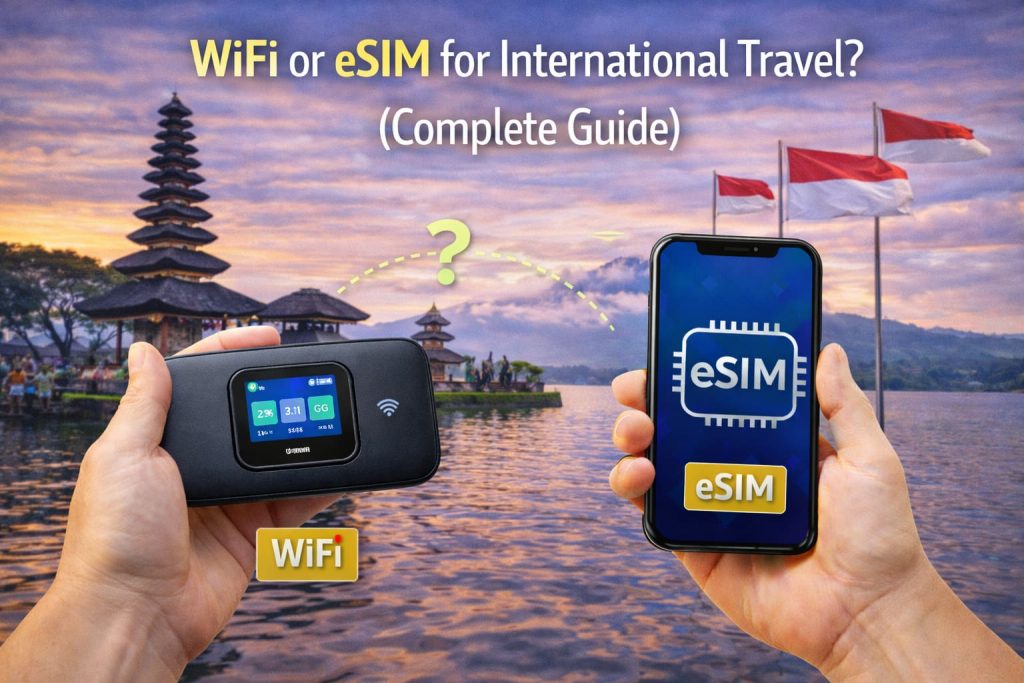
Table of Contents
I. Why Internet Access Is Essential When Traveling
In today’s world, Internet access abroad isn’t just a luxury — it’s a necessity.
Whether you need to check maps, contact family, book a ride, or manage work on the go, connectivity brings peace of mind and convenience.
Travelers mainly choose between:
- Pocket WiFi devices, which provide wireless Internet via a router, and
- eSIMs, which use your phone’s built-in technology to access local data networks.
Understanding how these two differ will help you make the right decision for your next trip.
II. What Is Portable WiFi for Travel?
A portable WiFi (often called a WiFi hotspot or pocket WiFi) is a small device you carry with you. It connects to a mobile network and shares that connection via WiFi with your phone, tablet, or laptop.
How it works: You rent or buy the device before your trip, power it on at your destination, and connect your gadgets to it like a normal WiFi connection.
Portable WiFi can usually connect multiple devices at once — useful for families or groups traveling together.
III. What Is an eSIM for Travel?
An eSIM (embedded SIM) is a digital version of a SIM card that’s already built into your smartphone. You activate an eSIM plan by scanning a QR code — no physical card required.
Once installed, it connects you directly to a local or regional network wherever you are.
Unlike pocket WiFi, there’s no extra equipment to carry or charge. Everything happens within your phone.
You can easily find travel-friendly eSIM data plans for Asia, Europe, or even global coverage at [https://indonesiaesim.com/] — all set up online before your flight.
IV. Comparing WiFi vs eSIM for International Travel
Let’s look at the most important points side by side:
| Feature | Portable WiFi | eSIM |
| Setup | Rent or buy device | Scan QR code in minutes |
| Weight | Requires carrying a router | Digital, built into your phone |
| Battery | Needs daily charging | No charging required |
| Data Speed | High, depends on device | High, uses local networks |
| Coverage | Global (depending on SIM inside) | Regional or worldwide plans |
| Cost | Rental + deposit + data | Pay only for your plan |
| Share Data | Yes (for multiple users) | Yes, via hotspot |
| Replacement Risk | Can be lost or damaged | Impossible to lose physically |
From the comparison, WiFi routers suit group travel, but eSIMs are lighter, faster, and simpler for solo travelers or digital nomads.
V. The Pros and Cons of Each Option
- Portable WiFi
Pros:
- Connect multiple devices at once
- Good choice for groups or families
- Easy to switch between users
Cons:
- Must carry and charge daily
- Extra weight and cost for rental
- Risk of loss or damage fees
- eSIM for International Travel
Pros:
- 100% digital — no hardware needed
- Quick online setup before departure
- Usually more affordable than roaming
- Instant connection once you arrive
Cons:
- Works with eSIM-compatible phones only
- Data-only (no traditional calling number)
VI. Cost Comparison
When traveling for a week or two, these are typical estimates:
| Duration | Portable WiFi (rent) | eSIM (prepaid plan) |
| 3–7 days | USD 25–50 | USD 5–15 |
| 10–14 days | USD 40–80 | USD 10–25 |
| 1 month | USD 60–100 | USD 20–35 |
While prices vary by provider and destination, eSIMs generally cost less because there’s no physical device, deposit, or shipping involved.
VII. Which Option Should You Choose?
The ideal choice depends on your travel habits:
- If you travel in a group, need to share data with multiple people, or have older devices without eSIM support → Portable WiFi is suitable.
- If you travel alone, move often between countries, or want fewer gadgets → eSIM is the smarter choice.
Frequent travelers and digital workers often prefer eSIM because they can manage everything online and connect instantly in every country.
VIII. Tips for Using eSIMs When Traveling
Before your trip:
- Check that your phone is unlocked and supports eSIM.
- Buy and install your eSIM plan at home over WiFi.
- Save the QR code email in case you reinstall it later.
- Turn off roaming on your physical SIM to avoid charges.
Once you land, simply turn on Data Roaming and start browsing immediately.
IX. Final Thoughts
Both portable WiFi and eSIM can keep you connected during international trips — but for most modern travelers, the eSIM option has become the clear favorite.
It’s faster to set up, lighter to carry, and more affordable in the long run. For short vacations or frequent travel across multiple regions, using an eSIM makes sense both financially and practically.
If you’re planning a trip soon, you can explore flexible eSIM data options for your destination on [https://indonesiaesim.com/] and enjoy instant Internet once you land — no routers, no queues, just connection.
If you’re heading to Gili Trawangan or Lombok, chances are you’ll want constant access to WhatsApp, maps, and quick uploads of those beach sunsets. But, island Internet in Indonesia can be hit or miss — and that’s exactly where a good eSIM makes a world of difference. In this 2026 guide, you’ll find out which […]
If you use WhatsApp daily for calls, messages, or client chats — you already know how important stable data is. But what if you want to keep WhatsApp active on a secondary phone, just for communication while abroad? In 2026, the easiest, most cost‑effective way to stay connected is with an eSIM plan — especially […]
So, you’re planning a trip to Bali, Jakarta, or Lombok — but you haven’t arrived yet. You want to stay connected right when you land, without hunting for SIM shops or juggling roaming fees. Good news: in 2026, you can get your Indonesia eSIM entirely online — even if you’re not in the country yet. […]
Whether you’re exploring Bali’s rice terraces, hopping between coworking cafés in Canggu, or navigating the winding streets of Ubud, having strong, consistent Internet is essential. For many travelers and remote workers, the biggest question is: Which eSIM actually delivers stable data for video calls, navigation, and daily connectivity in Bali? Let’s take a detailed look […]
As eSIM technology becomes more common in Southeast Asia, many travelers and residents are asking: Can I use multiple eSIMs in Indonesia? Yes — you can. Most modern smartphones now support multiple eSIM profiles, which means you can switch between different data plans and mobile networks without needing extra SIM cards. In this practical guide, […]
When traveling abroad, one of the biggest concerns is how to stay connected without paying high roaming charges. Traditional SIM cards often come with extra steps, registration, or unpredictable fees. That’s where eSIM international roaming becomes a game changer — simple, instant, and affordable. In this guide, we’ll explain how it works, why travelers love […]